

The Case for the Slow Morning
Why we delayed formal lessons until the sun was high and the birds were fed

The kitchen clock used to be my commanding officer. In the early years of our homeschooling journey, I lived under the tyranny of whatever idealized start time I had defined for myself that month. I had convinced myself (like via too many late-night podcast listening hours) that ‘getting things done’ was synonymous with ‘as early as possible’ and that if we weren’t cracking open the language arts books while the dew was still heavy on the grass, we were somehow falling behind.
I’ve since realized that the imaginary benchmark we were supposedly falling behind wasn’t real…but the burnout was.
There is a cultural obsession with the “productive” morning—the 5:00 AM club, the pre-dawn workout, the inbox cleared before the first pot of coffee is drained. But in the ecosystem of a home where learning and living are inextricably tangled, I’ve found that the most profound growth doesn’t happen under the glare of a deadline. Heck, with 5 kids of various ages deadlines feel truly impossible. Growth, I have learned, occurs in the margins. It happens in the slow morning.
The Rhythms of the Natural World
It recently struck me how little the natural world cares for our frantic human pacing. The Earth doesn’t grind. It tilts; it leans; it lingers. It moves on at an even pace without regard for any external time fad.
In our home, when we shifted our formal school hours to later in the day, we weren’t being lazy. We were becoming observational. We decided to delay the workbooks until the sun was high in the sky and the birds in our backyard were fed. This wasn’t just a change in schedule; it was a change in philosophy.
By prioritizing the “unproductive” hours of 7:00 AM to 10:00 AM, we invited a different kind of teacher into our home: Curiosity.
The Ritual of the Bird Feeder
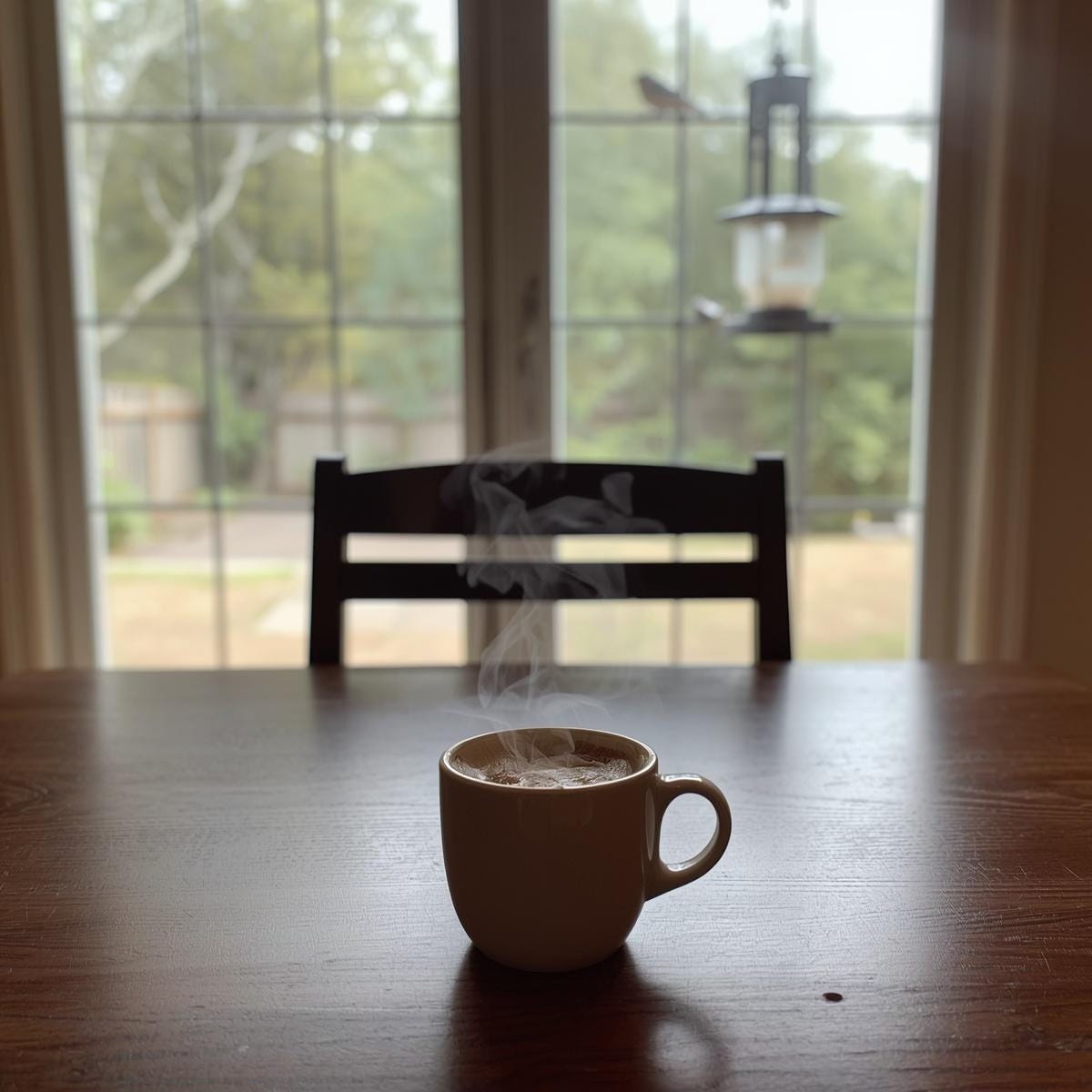
In our house, the day now begins not with a pencil, but with observing the bird feeder through the large sliding door windows as we sit at the breakfast table (and, occasionally, with refilling said feeder for our hungry friends).
There is a specific kind of quiet that exists in the morning before the ‘shoulds’ take over. When my children stand by the window, watching the frantic energy of a sparrow or the bold arrival of a blue jay, they are engaging in a science lesson that no textbook can replicate. They are learning about caloric needs in winter, territorial behaviours, and the subtle shift of feathers as the seasons turn.
If I had forced them to start on Math at 9AM, we would have missed the morning a Cooper’s hawk landed on the fence. We would have missed the way the frost patterns on the glass look like fern fronds. Those moments aren’t distractions from the curriculum; they are the curriculum.
Why the High Sun Works for the Brain
There is a practical, almost biological, argument for the late-start morning. If you look at a stack of books on a kitchen table—the very one I’m sitting at now as the light streams in—you realize that information requires a receptive vessel.
A child who has spent two hours playing in the backyard, helping grind coffee beans, or sketching the birds they just fed, is a child whose nervous system is regulated. They are settled. By the time the sun is high and we finally open our books, the resistance has evaporated. We aren’t fighting the morning grumps because the morning was spent filling their cups rather than draining them.
We’ve found that:
Focus is sharper: The brain fog of early rising has lifted.
Retention is higher: Lessons are connected to the real-world observations made earlier that morning.
Atmosphere is kinder: The frantic ‘hurry up and learn’ energy is replaced by a steady, purposeful pace.
Defending the Margins
Choosing the slow morning is, in many ways, an act of rebellion. We live in a world that asks us to justify every minute of our time with a measurable output. If you tell a neighbour you didn’t start school until 11:00 AM, you might feel the need to apologize or explain that you were doing ‘enrichment activities.’
But let’s stop apologizing.
The time spent watching the light move across the floorboards isn’t wasted. The time spent in a long, rambling breakfast conversation about why the solstice happens isn’t a delay. These are the foundations of a life well-lived. We are teaching our children that they are not machines designed for maximum throughput. They are human beings designed for wonder.
Transitioning to the Table
When we do eventually move to the homeschool table, the transition feels organic. The books are waiting, the sunlight is hitting the pages just right, and the house smells like toast and bacon instead of stress.
By delaying the formal, we protect the essential. We allow the science of the seasons to be something we feel in our bones, not just something we read in a paragraph. We feed the birds, we watch the sun climb, and only then—when the world has shown us its own morning glory—do we pick up the pencils.
Making the Shift: A Quick Guide to the Slow Morning
If you’re feeling the pull toward a slower start but aren’t sure how to justify it to your inner critic, try these three shifts:
The Observation First Rule: Spend the first hour of the day offline and outside (or by a window). What is the weather doing? What are the animals doing?
The Staggered Start: Let the kids wake up naturally. Use the early quiet for your own reading or reflection so you meet them with a full tank.
Low-Stakes Learning: Keep a basket of morning books—poetry, nature guides, or beautiful picture books—near the breakfast table. This bridges the gap between home life and school life without the pressure of a grade.
“The sun does not hurry, yet everything is accomplished.” — Lao Tzu
As we approach the next turn of the celestial wheel, I encourage you to look at your morning routine. Is it serving your family’s soul, or just your family’s calendar?
If you’re looking for a way to ease into this slower pace and if you found value in this post, would you consider subscribing to my Sunday Notes Newsletter? I share a weekly note, a prompt to help you simplify your homeschool, and a living book recommendation for your read-aloud enjoyment. I’d love to meet you there.