

Nature Journaling 101: Observing Like a Scientist in your Own Backyard
Nature journaling isn’t about being an artist; it’s about being a witness.

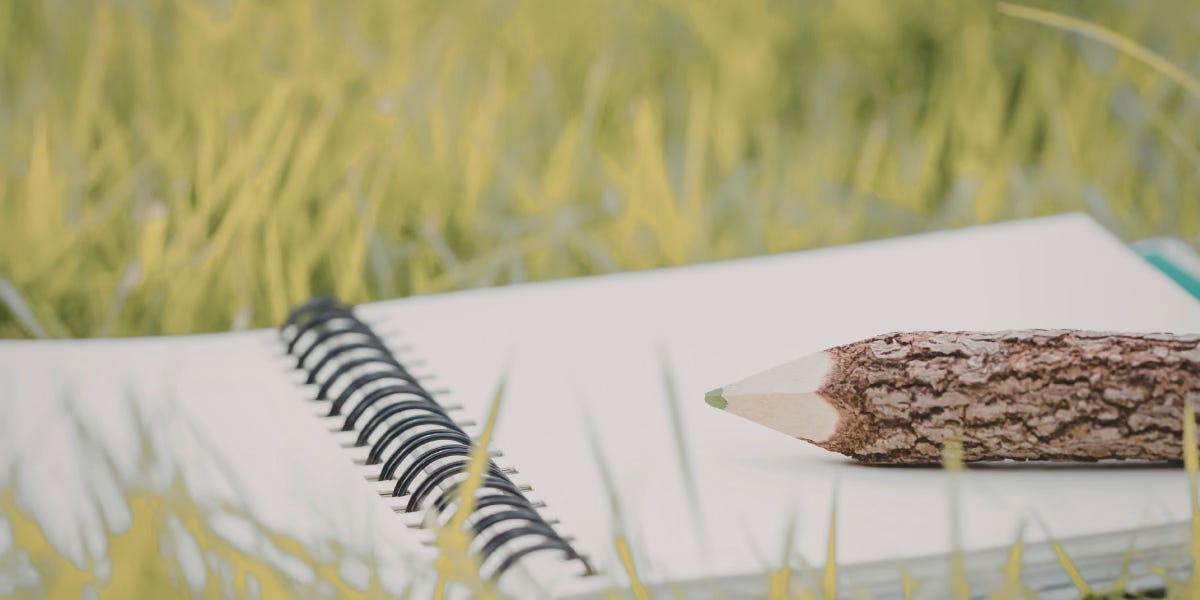
For many families starting their homeschooling journey, the science portion of the day often feels like it should involve beakers, goggles, and a tidy workspace. But some of the most profound scientific discoveries—the kind that stick with a child for a lifetime—don’t happen at a desk. They happen in the mud, under the shade of a Silver Maple, or while staring at a frost-covered window.
Nature journaling is more than just an art project. It is a rigorous, sensory-led method of scientific inquiry. It’s a way to meet provincial/state curriculum expectations while fostering a deep, personal connection to the local landscape.
Whether you have a sprawling rural acreage or a small urban balcony, your backyard (or local park) is a laboratory waiting to be explored.
Why Nature Journaling is Essential for Science
In an age of instant digital answers, nature journaling teaches the one skill every scientist needs: patient observation. By slowing down to record what they see, students move from looking to truly seeing.
Developing the “I Notice” Habit: When a child draws a leaf, they aren’t just making a picture. They are noticing the serrated edges, the way the veins branch like a river system, and the subtle variations in green. These are the foundations of biological classification.
Building Data Consistency: A nature journal is a record of phenology—the study of cyclic and seasonal natural phenomena. Over time, your child’s journal becomes a localized database. They can look back and see exactly when the first Robin arrived last year versus this year, turning them into backyard climatologists.
Fostering Curiosity (The “I Wonder” Phase): Observation naturally leads to questions. “Why are the ants only on the peony buds?” or “Where do the squirrels go when it’s sleeting?” In curriculum connection terms, these questions are the initial observations that drive the Scientific Research Process.
Setting Up Your Journaling Kit
One of the best things about nature journaling is that it is remarkably low-tech and accessible. You don’t need expensive supplies to begin.
The Journal: A simple sketchbook with thick, unlined paper is best. It needs to be sturdy enough to withstand a bit of dirt and a few raindrops. We have used simple Sketchbooks from Dollar Tree, Dollarama, and Michaels. There is something for every budget.
The Tools: A high-quality graphite pencil, an eraser, and perhaps a small set of coloured pencils, watercolour pencils or travel-sized paints.
The Scientist Tools: A small magnifying glass and a ruler are game-changers. Being able to measure the diameter of a fungi cap or see the fuzz on a mullein leaf adds a layer of technical accuracy to their work.
Some way to carry supplies is also helpful. If your children are old enough, have them carry and be responsible for their supplies in their own backpack. If you are dealing with toddlers, you’ll need to bring supplies along in your own backpack or stroller.
How to Guide Your Child (Without Taking Over)
As parents, we often want to correct our children’s drawings. But in nature journaling, accuracy of observation is more important than artistic beauty. And of course, ages and stages of development affect what a child can and will record. If your child draws a symbol of a tree (a brown stick with a green cloud), gently redirect them back to the specimen. Ask: “Does the bark look smooth like a slide, or bumpy like a road? Where do the branches start—low to the ground or high up?” Encourage them to use a framework of “I Notice, I Wonder, It Reminds Me Of”:
I Notice: “The beetle has six legs and a shiny blue back.” (Fact-based observation)
I Wonder: “I wonder if it’s eating the pollen or just resting?” (Scientific hypothesis)
It Reminds Me Of: “The color reminds me of my favorite marble.” (Building neural connections and metaphors)
Whatever they produce after this type of inquire will be uniquely theirs and something to refer back to as seasons change.
This Week’s Quick-Win Nature Prompt: The 1-Square-Metre Safari
This is a perfect activity for those days when going for a hike feels like too much work. It proves that nature isn’t just out there in a provincial park; it’s right under our feet.
The Mission:
The Perimeter: Use a piece of string or four sticks to mark out a 1-metre by 1-metre square in your yard or a nearby green space.
The Observation: Sit beside the square for 10 minutes. Tell your child they are on a safari and their job is to find every living thing inside that small space.
The Journal Entry: Have them record at least three things they found. It could be a specific type of grass, a tiny red spider, a piece of moss, or a seedling.
The Challenge: Use a magnifying glass to look at one of those items super-sized and draw what it looks like from a bug’s perspective.
This exercise builds focus and reinforces the idea that the natural world is teeming with life, even in the most ordinary places.
The Living Book Recommendation
Find this book through your local public library, or purchase via the link below.

The Country Diary of an Edwardian Lady by Edith Holden
This is the ultimate mentor text for nature journaling. While the illustrations are famous, I want you to focus on Edith’s notes. She records the weather, the sightings of first flowers, and bits of poetry that matched her mood.
For the Kids: Show them how her “messy” handwriting and little side-notes make the book feel alive. It’s a record of a life lived outdoors.
Cultivating a Lifelong Habit
Nature journaling isn’t about finishing a book; it’s about starting a conversation with the world. By encouraging your kids to keep a record of their backyard discoveries, you are giving them the tools to be lifelong learners, keen observers, and stewards of the beautiful Ontario landscape.
Remember: you don’t need to be an expert. You just need to be willing to sit in the grass and ask, “What do you see?”
Looking for more Inspiration? I send a weekly Sunday Rhythms Newsletter on topics just like the one covered here. SO much goodness to absorb with a hot cup of tea. Are you ready to join us?