

Building a Living Library on a Budget
How to source high-quality literature without breaking the bank.

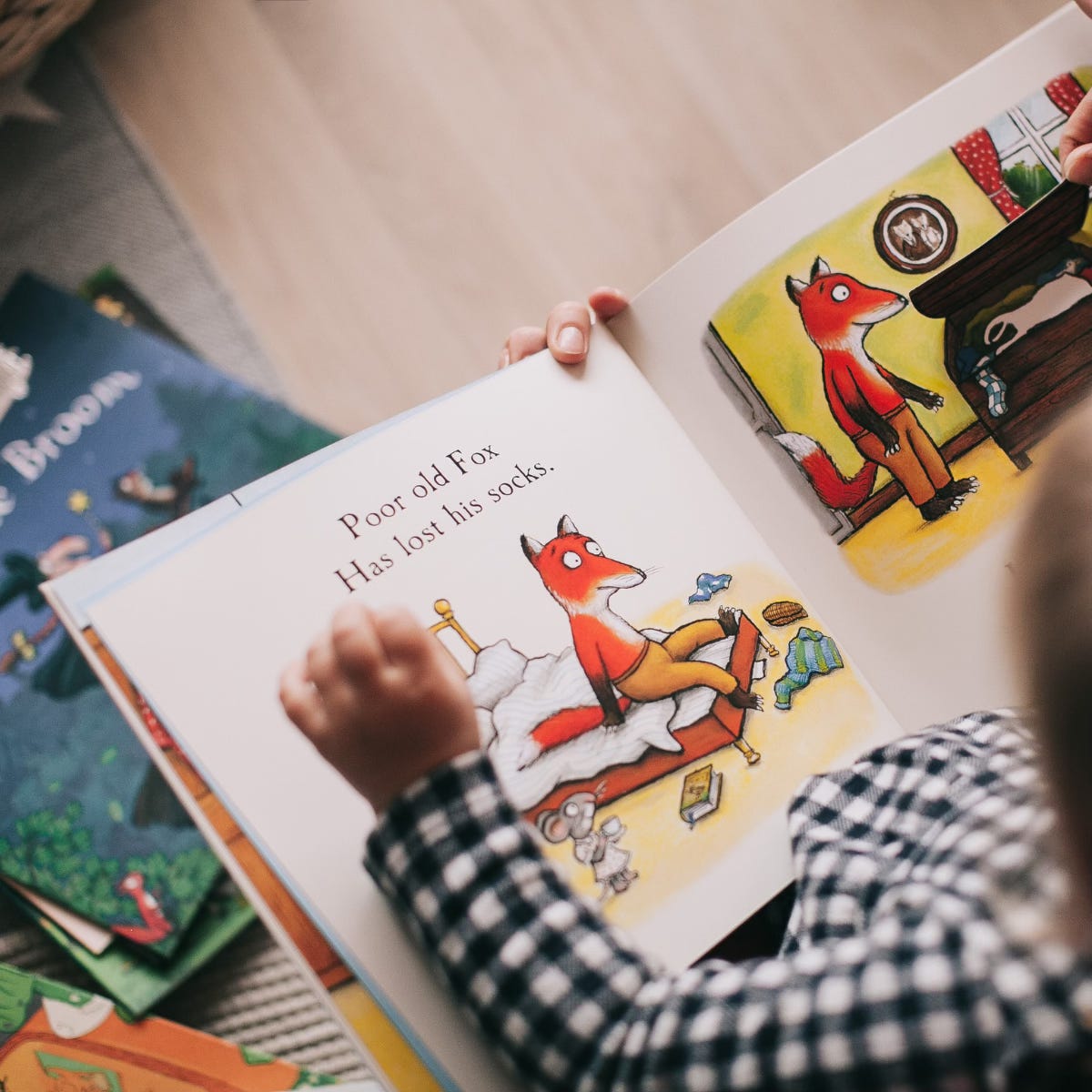
There is a specific kind of magic that lives in a well-loved book. It’s in the softened corners of the cover, the slight yellowing of the pages, and that unmistakable musky scent of old paper that wafts up when you crack the spine. In our home, books aren’t just decor; they are the mentors, the explorers, and the quiet companions that lead my children through history, science, and the far reaches of their own imaginations.
In the world of Charlotte Mason and living books, we often talk about laying a feast for our children. But if you’ve ever browsed a curated booklist or stepped into a boutique bookstore, you know that this feast can quickly come with a five-star price tag. When you are homeschooling five children and trying to simplify your life, investing in and storing a brand new cloth-bound curriculum can feel like a heavy burden on the family budget.
I’m here to tell you that a living library doesn’t require a trust fund. It requires a keen eye, a bit of patience, and a shift in how we value the used over the new.
The Living Book Philosophy
Before we talk about the where, let’s talk about the what. What makes a book “living”? While Ms. Mason has her classic definition, to me, a living book is the opposite of a dry, fact-heavy workbook. It’s a story told by someone who loves their subject. It’s a narrative that sparks a living idea in the mind of the reader. Something a child can hold onto and explore further in their own imagination.
When I’m looking for books to add to our shelves I’m looking for literature that respects the child’s intellect. I want books that are beautiful to read aloud (even when I’ve microwaved my coffee for a third time, and the toddlers are throwing all the sofa cushions on the floor again.)
The Strategy: Sourcing the Feast
Building a library is a marathon, not a sprint. If you try to buy an entire year’s worth of curriculum at once, you’ll likely end up with buyer’s remorse and a very thin wallet. Instead, I’ve learned to hunt for our books using a few specific strategies:
1. The Local Library: Your Most Powerful Tool (and How to Use It)
It seems obvious, but the library is the ultimate budget-saver. However, the trick to using it for a living education is the Hold system. I rarely just wander the aisles with five kids in tow—that’s a recipe for sensory overload and bringing home fifteen books about Paw Patrol. Instead, I spend twenty minutes on a Sunday evening placing holds on specific titles from curated living booklists. I pick them up at the desk, and suddenly, our morning basket is full of high-quality literature for exactly zero dollars.
Tip: If your library doesn’t have a title, ask about an Inter-Library Loan. Most systems in Ontario are connected, and they may be able to bring in a rare book from three towns over just for you. Alternatively, ask if you can put in a request for them to acquire the book you’re looking for and be sure to have them notify you if/when they do.
2. The Thrifting Eye
Thrift stores can be hit-or-miss, but when they hit, it is glorious. My favourite books to thrift are Art books - large, coffee-table style books that provide plenty of interesting art from various time periods for kids to browse through and find inspiration from. These are the books you might pay $50+ for new, but $6 for in a thrift store.
I also look for older editions of nature guides, classic literature, and value from the 1950s and 60s. Why older books? Often, the illustrations in vintage nature books are more living and detailed than the modern, digital versions.
When I’m at a thrift store, I skip the ‘Bestseller’ wall and head straight to the children’s non-fiction and the vintage hardcover sections. Look for publishers like Scribner’s, Doubleday, or the Signature biographies. These were the open-and-go resources of a previous generation, and they are often sturdier and more beautifully written than what you’ll find in a big-box store today.
3. Online Used Bookstores
When I need a specific title for a unit study and the library let me down, I turn to the internet. The key here is to choose used whenever possible, and to look for “Acceptable” or “Good” condition. A ‘Library Discard’ stamp doesn’t change the quality of the prose. In fact, seeing a library pocket in the back of a book makes me feel like we are part of that book’s long history of serving curious minds.
The Art of the Purge
Part of building a library on a budget is knowing what not to keep. A minimalist library isn’t about having very few books; it’s about having only the right books.
Every few months, I go through our shelves. If a book hasn’t sparked a conversation, if the illustrations feel jarring or over-stimulating, or if it is twaddle (think the loud, commercialized stories that offer no food for thought), it goes in the donation bin.
By clearing out the clutter, we make room for the books that truly matter. It makes our collection feel tactile and intentional, rather than overwhelming.
Turning the Kitchen Table into a Sanctuary
Growing up, my Dad was a high school librarian and my Mom an avid reader (she still is!) I have vivid memories of stacks of National Geographic magazines lining a shelf in our basement. And the sight of a stack of library books on our dining room table brings to mind a feeling of belonging. To an outsider, it was just a pile of books. To me, it was a sanctuary.
When we prioritize these living stories, even on a budget, we are telling our children that their education is worth the hunt. We are showing them that beauty isn’t something you buy off a shelf in a plastic wrapper; it’s something you discover, preserve, and pass down.
Whether you are teaching about the solstice or the life cycle of a monarch butterfly, remember that the most important resource in your home isn’t the most expensive book—it’s the time you spend curled up together, reading it.
Budget-Friendly Book Hunting Checklist
If you’re feeling the overwhelm of a growing booklist, keep these three things in mind:
Check the Library First: Always. Set a recurring alarm on your phone to check your holds (trust me…you’ll forget)
Focus on Multi-Age Books: If a book can be enjoyed by your 4-year-old and your 10-year-old, it’s worth twice its weight in gold.
Quality over Quantity: One beautiful, well-written book on birds is better than ten cheap, flimsy ones.
“Books are the quietest and most constant of friends; they are the most accessible and wisest of counsellors, and the most patient of teachers.” — Charles W. Eliot
Building a library is an investment in your family’s culture. It doesn’t have to happen overnight, and it certainly doesn’t have to be expensive. Start where you are, use what you have, and keep your eyes open for those hidden gems at the back of the thrift store shelf. I always find at least one…usually six.
If this post inspired you and you feel like some book recommendations would help, would you consider subscribing to the Sunday Notes Newsletter? I send a weekly Note, a prompt for simplifying your homeschool by getting out in nature, and a living book recommendation that you’re sure to love.